

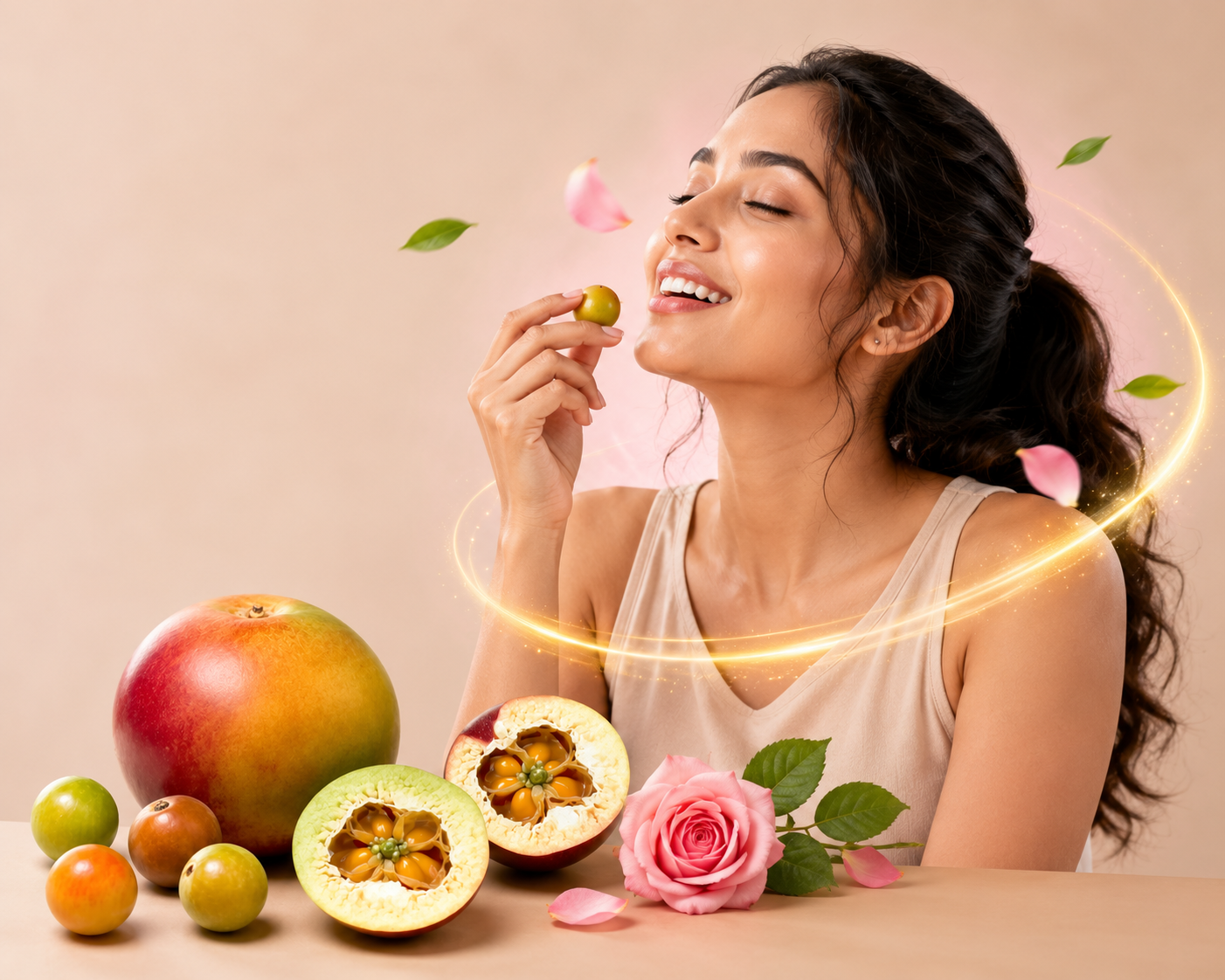
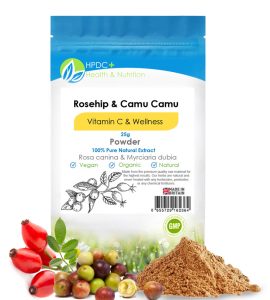
Walk down the supplement aisle of any high-street chemist and you will find a wall of orange vitamin C tablets, most of them made with ascorbic acid. HPDC’s Camu Camu & Rosehips Organic Powder takes a different approach: two whole fruits that are naturally rich in vitamin C, blended into a single powder with no fillers and no sweeteners.
Camu camu is one of the richest natural sources of vitamin C, and rosehips have been a British source of vitamin C for generations.
Synthetic and Whole-Food Vitamin C
Most vitamin C supplements contain ascorbic acid made in a factory. It has the same chemical structure as the vitamin C in fruit. Whole-food powders such as camu camu and rosehip are different: they are simply the dried fruit, so alongside vitamin C they contain the fruit’s other natural compounds, such as flavonoids, plus its colour and flavour.
Some people simply prefer to get their vitamin C from a whole fruit powder they can stir into a smoothie, juice or yoghurt.
What Makes Camu Camu Special
Camu camu (Myrciaria dubia) is a small reddish-purple berry that grows on shrubs along the flooded riverbanks of the Peruvian and Brazilian Amazon. It is one of the richest natural sources of vitamin C: dried camu camu powder contains many times more vitamin C than an orange.
As a whole fruit, camu camu also naturally contains plant compounds such as ellagic acid and anthocyanins (the pigments that give it its deep colour), along with small amounts of minerals and beta-carotene.
Why Rosehips Complete the Picture
Rosehips, the bright orange fruit of Rosa canina (the wild dog rose), have been part of European folk tradition for centuries. During the Second World War, when shipping blockades cut Britain’s citrus imports, the Ministry of Health organised a national rosehip-gathering programme. Schoolchildren were paid for the hips they collected, which were made into rosehip syrup, a familiar source of vitamin C for wartime families.
Besides vitamin C, rosehips naturally contain carotenoids such as lycopene and beta-carotene, and flavonoids such as rutin and quercetin.
Whole Fruit, Not an Extract
A whole-fruit powder is exactly that: the fruit, dried and milled. Nothing is isolated or added, so what you get is the vitamin C together with the fruit’s own colour, flavour and natural plant compounds.
Why Vitamin C Matters
Vitamin C is an essential nutrient that the body cannot make for itself. Vitamin C contributes to:
- the normal function of the immune system
- normal collagen formation for the normal function of skin, gums, teeth, bones, cartilage and blood vessels
- the protection of cells from oxidative stress
- the reduction of tiredness and fatigue
- normal energy-yielding metabolism
- increased iron absorption
How to Use Camu Camu & Rosehips Powder
One of the joys of this product is its versatility. Unlike a tablet you have to swallow, the powder integrates into food and drink in dozens of ways:
- Morning smoothie — 1 teaspoon blended with banana, berries, spinach and plant milk. Antioxidant-loaded and ready in 60 seconds.
- Citrus water — Stir into still or sparkling water with a squeeze of fresh lemon. A natural alternative to fizzy vitamin C tablets.
- Yoghurt or porridge — Sprinkle over breakfast for a subtle tart flavour and a nutrient density boost.
- Iced tea — Stir into iced green tea — the catechins and the bioflavonoids work beautifully together.
- Energy balls — Mix into raw date-and-oat energy ball recipes for a tangy lift.
- Salad dressings — Whisk into olive oil and apple cider vinegar with a touch of honey.
- Skin masks — Mix with raw honey for a weekly brightening face mask (patch test first).
Daily Dosage
Follow the serving suggestion on the label. The powder is available in 50g, 100g and 150g pouches; the 150g size offers the best value per gram.
A Note on Heat
Vitamin C is heat-sensitive — it begins to degrade above 70°C. For maximum potency, add the powder to cold or lukewarm drinks and food. Light baking (under 180°C, briefly) preserves most of the activity, but a teaspoon stirred into a steaming hot drink will lose a significant percentage of its vitamin C in minutes.
Frequently Asked Questions
Q: How is it made?
The fruit is harvested, dried and milled into a fine powder, with no fillers or sweeteners added.
Q: What does it taste like?
It has a naturally tart, tangy flavour, a little like cranberry. Most people enjoy it in smoothies or fruit-based recipes. If you find it sharp, blend it with a date or a teaspoon of honey.
Q: Pregnancy, breastfeeding or medication?
Please speak to your midwife, GP or pharmacist before starting any new supplement.
This article is for educational purposes only. Vitamin C supplementation is generally safe but individual needs vary. Please consult a healthcare professional before adding any new supplement to your routine, particularly if you have kidney disease, take iron supplements, or are on prescription medication.
Featured image: Rosa canina hips TK 2023-10-15 1.jpg by T. Kebert, CC BY-SA 4.0, via Wikimedia Commons.