

Walk down the supplement aisle of any high-street chemist and you will find a wall of orange-coloured Vitamin C tablets. The vast majority contain synthetic ascorbic acid — a lab-manufactured compound that is chemically identical to natural Vitamin C but stripped of every co-factor that nature provides alongside it. HPDC’s Camu Camu & Rosehips Organic Powder takes the opposite approach: two of the most concentrated whole-food Vitamin C sources on Earth, blended into a single 100% pure powder with no fillers, no sweeteners, and absolutely nothing synthetic.
Camu Camu contains up to 60 times more Vitamin C per gram than an orange — and Rosehips deliver the bioflavonoids that make it actually work in the body.
— HPDC Master Herbalists
The Synthetic Vitamin C Problem
Most commercial Vitamin C is produced through the Reichstein process — a multi-step chemical conversion starting from corn glucose, fermented and synthesised in industrial facilities, predominantly in China. The end product is pure ascorbic acid, identical in molecular structure to the Vitamin C in fruit. But it’s missing something crucial.
In nature, Vitamin C always arrives packaged with what scientists call its “co-factor matrix” — bioflavonoids (rutin, hesperidin, quercetin), tannins, ascorbinogen, J-factors, K-factors, and the entire complex of plant chemistry that has evolved alongside it for millions of years. These co-factors are not optional extras. They actively determine how much Vitamin C your body can absorb, how long it stays in the bloodstream, and how effectively it does its job.
What Makes Camu Camu Special
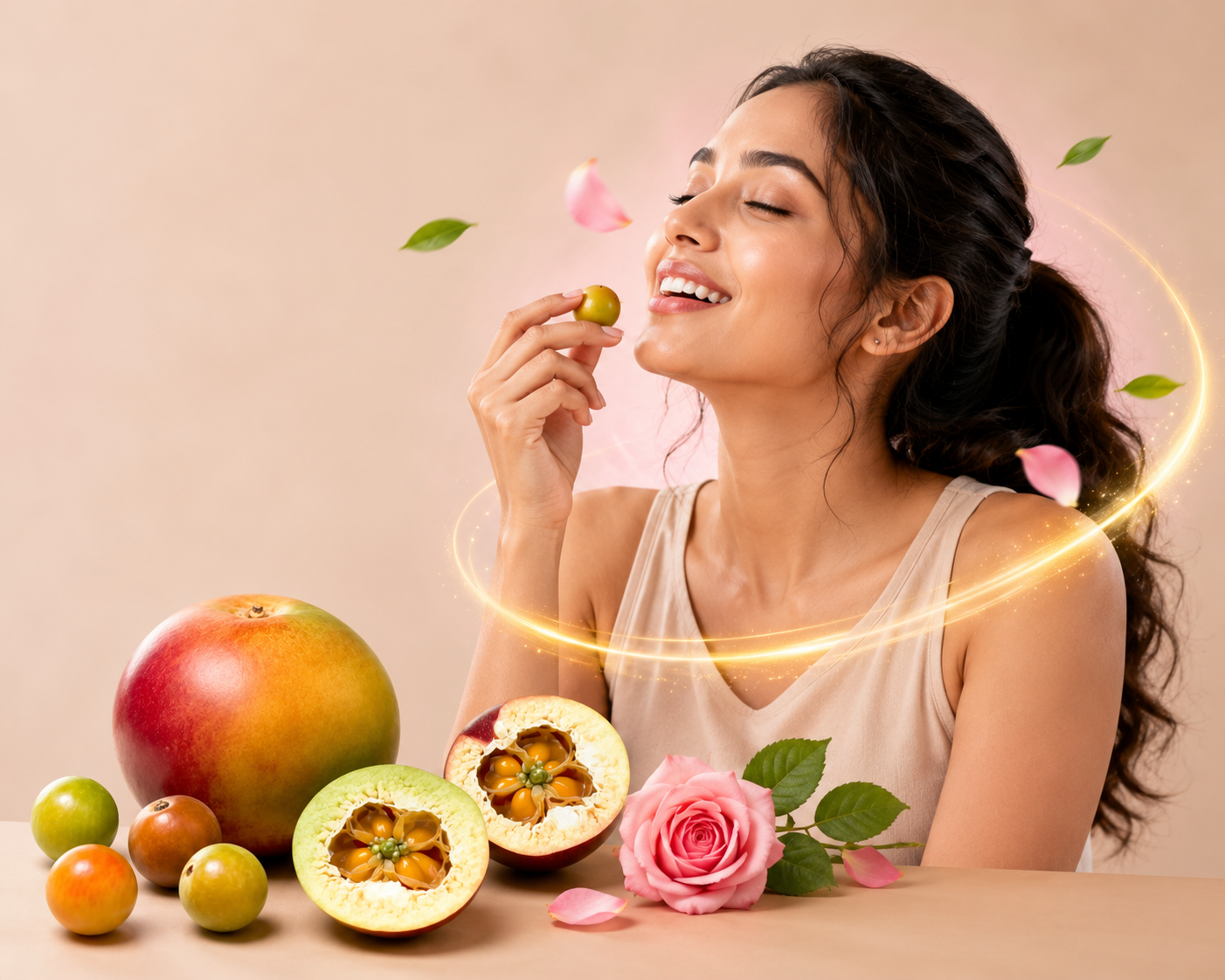
Camu Camu (Myrciaria dubia) is a small reddish-purple berry that grows on shrubs along the flooded riverbanks of the Peruvian and Brazilian Amazon. It is widely considered the most Vitamin C-rich food on the planet — with 2,000 to 3,000mg of Vitamin C per 100g of dried powder. For comparison, an orange contains around 50mg per 100g.
But the Vitamin C is only the headline ingredient. Camu Camu also contains:
- Ellagic acid — a powerful polyphenol with antioxidant and anti-inflammatory activity
- Anthocyanins — the deep red pigments that protect cardiovascular and brain health
- Serine, valine, leucine — amino acids that support tissue repair
- Iron, potassium, calcium and beta-carotene — naturally present in small but bioactive amounts
Why Rosehips Complete the Picture
Rosehips — the bright orange fruit of Rosa canina (the wild dog rose) — have been a cornerstone of European folk medicine for centuries. During the Second World War, when shipping blockades cut off Britain’s citrus imports, the Ministry of Health launched a national rosehip-gathering programme. Schoolchildren were paid 3 pence per pound of hips collected, which were processed into the famous “rosehip syrup” distributed free to families with young children. The result: Britain’s wartime population maintained Vitamin C levels that other European countries lost.
Modern research has explained why rosehips are so much more than a Vitamin C source:
- GOPO (galactolipid) — A unique anti-inflammatory compound found only in rosehips. Multiple randomised trials have shown standardised rosehip powder reduces joint pain in osteoarthritis comparably to ibuprofen, with no GI side effects.
- Lycopene — A carotenoid associated with cardiovascular protection and skin photo-protection. Rosehips contain more lycopene than tomatoes.
- Beta-carotene & zeaxanthin — Eye-protective carotenoids that accumulate in the macula and reduce age-related vision decline.
- Rutin and quercetin — Bioflavonoids that strengthen capillary walls, reduce histamine release, and can boost Vitamin C absorption by up to 35%.
The Bioavailability Difference
A 2002 study in the Journal of the American College of Nutrition compared synthetic ascorbic acid against a Vitamin C-rich fruit extract. The whole-food group maintained higher plasma Vitamin C levels for longer, with significantly greater intracellular absorption. The researchers attributed the difference to the bioflavonoid co-factors — exactly what synthetic supplements strip away.
What the Powder Actually Does in the Body
HPDC’s Camu Camu & Rosehips Powder supports far more than just immunity. The full benefit list documented on our product page includes:
- Immune system support — Vitamin C drives white blood cell function and immune cell migration
- Collagen synthesis — essential for skin, hair, nails, joints, blood vessels and connective tissue
- Antioxidant activity — neutralises free radicals from pollution, UV exposure, and metabolism
- Joint comfort — particularly via the GOPO compound from rosehips
- Cardiovascular support — bioflavonoids strengthen blood vessels and support healthy circulation
- Skin glow & elasticity — collagen plus antioxidants visibly improve skin tone with consistent use
- Eye health — carotenoids from rosehips support macular function
- Digestive comfort — gentle on the gut, unlike high-dose synthetic Vitamin C which can cause loose stools
- Allergy & hayfever support — quercetin and Vitamin C reduce histamine release
- Iron absorption — Vitamin C dramatically increases the absorption of plant-source iron
How to Use Camu Camu & Rosehips Powder
One of the joys of this product is its versatility. Unlike a tablet you have to swallow, the powder integrates into food and drink in dozens of ways:
- Morning smoothie — 1 teaspoon blended with banana, berries, spinach and plant milk. Antioxidant-loaded and ready in 60 seconds.
- Citrus water — Stir into still or sparkling water with a squeeze of fresh lemon. A natural alternative to fizzy Vitamin C tablets.
- Yoghurt or porridge — Sprinkle over breakfast for a subtle tart flavour and a nutrient density boost.
- Iced tea — Stir into iced green tea — the catechins and the bioflavonoids work beautifully together.
- Energy balls — Mix into raw date-and-oat energy ball recipes for a tangy lift.
- Salad dressings — Whisk into olive oil and apple cider vinegar with a touch of honey.
- Skin masks — Mix with raw honey for a weekly brightening face mask (patch test first).
Daily Dosage
The standard daily serving is 1 teaspoon (approximately 3g) — providing 60–90mg of natural Vitamin C alongside the full co-factor profile. Many regular users build up to 1–2 teaspoons per day, particularly during winter months, periods of high stress, or when training intensely. The product is available in 50g, 100g, and 150g pouches — the 150g size offers the best value per gram.
A Note on Heat
Vitamin C is heat-sensitive — it begins to degrade above 70°C. For maximum potency, add the powder to cold or lukewarm drinks and food. Light baking (under 180°C, briefly) preserves most of the activity, but a teaspoon stirred into a steaming hot drink will lose a significant percentage of its Vitamin C in minutes.
Frequently Asked Questions
Q: Is the powder organic?
Yes. Both the Camu Camu and the Rosehips in our blend are certified organic. No pesticides, no irradiation, no chemical processing.
Q: How is it processed?
The fruit is harvested, washed, and freeze-dried (or low-temperature dried) to preserve the heat-sensitive Vitamin C and the full polyphenol profile. It is then milled into a fine powder. No solvents, no high heat, no additives.
Q: Will it taste good?
It has a naturally tart, slightly tangy flavour — similar to a mix of cranberry and rosehip jam. Most people enjoy it in smoothies or fruit-based recipes. If you find it sharp, mix with a pitted date or a teaspoon of honey.
Q: Can I take it long-term?
Yes. Unlike synthetic high-dose ascorbic acid, whole-food Vitamin C does not stress the kidneys or cause rebound scurvy if you stop. It is genuinely food.
Q: Pregnancy and breastfeeding?
Generally considered safe in normal dietary amounts, but please consult your midwife or GP if you are pregnant or breastfeeding before starting any new supplement.
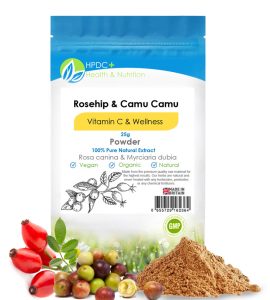
Camu Camu & Rosehips Organic Powder
100% pure · Freeze-dried · Organic · No fillers · UK quality
From £10.95
This article is for educational purposes only. Vitamin C supplementation is generally safe but individual needs vary. Please consult a healthcare professional before adding any new supplement to your routine, particularly if you have kidney disease, take iron supplements, or are on prescription medication.