

If there is one remedy that almost every UK household ought to keep within arm’s reach, it’s Arnica 30C. From toddler tumbles in the playground to weekend gardening strains, post-dental swelling to weekend gym soreness, Arnica has been the trusted first reach for bruises, bumps and physical trauma for over two hundred years. HPDC’s Arnica 30C is a traditional homeopathic preparation in convenient pillule form — sugar-free for the lactose-sensitive, family-safe, and small enough to keep in your bag, your gym kit, or your car’s glove box.
Arnica is the most widely recommended homeopathic first-aid remedy in the UK, and the first remedy taught in nearly every homeopathic training course.
— Faculty of Homeopathy, UK
What Is Arnica, Really?
Arnica montana, sometimes called mountain arnica, leopard’s bane, or wolfsbane, is a bright yellow daisy-family flower native to the alpine meadows of central Europe, the Pyrenees, and Siberia. For centuries, mountain shepherds rubbed crushed arnica flowers onto bruises, sprains and aching muscles after a day climbing rocky pastures. The herb itself is toxic if eaten in large amounts — which is precisely why homeopathic preparation, with its extreme dilution, made the plant’s healing potential safely accessible to everyone.
Today, Arnica is officially listed in the European Pharmacopoeia and remains the single best-selling homeopathic remedy in pharmacies across France, Germany, Italy and the UK.
Understanding the 30C Potency
“30C” refers to a specific dilution scale used in homeopathic preparation. The mother tincture is serially diluted 1:100 in pure water and alcohol, then succussed (vigorously shaken) at each step. After 30 such dilutions, the resulting preparation is impregnated onto small sucrose pillules. Different potencies have different traditional uses:
- 6C — Lower potency, suited to localised, recent injuries. Repeated more frequently.
- 30C — The standard recommendation for general home first aid. Versatile enough for everything from bruises to muscle soreness to post-operative recovery. Suitable for the whole family from infants to seniors.
- 200C and above — Higher potencies typically reserved for experienced homeopathic prescribers working with deeper constitutional patterns.
If you are new to homeopathy and unsure which to buy: 30C is almost always the right starting point. It is the potency stocked by virtually every homeopathic pharmacy as the default Arnica.
When to Reach for Arnica 30C
Arnica’s scope is wider than most people realise. The classic indication is bruising — but the remedy is genuinely useful for a long list of common acute situations.
Physical injuries
- Bumps, bruises & falls — The classic indication. Take immediately after any knock, before bruising has even appeared, and you will often see significantly reduced discolouration over the next 24 hours.
- Sprains & strains — Particularly when the injured area feels sore, bruised, and the person doesn’t want to be touched.
- Sports injuries — Football tackles, rugby collisions, cycling falls, gym mishaps. A staple in many physiotherapists’ first-aid kits.
- Concussion & head bumps — Always seek medical assessment for any head injury, but Arnica is widely used as a complementary support.
Muscle soreness & recovery
- Delayed Onset Muscle Soreness (DOMS) — The deep, achy soreness 24–48 hours after intense exercise or unaccustomed physical activity. Arnica can take the edge off significantly.
- Overexertion — That “beaten up” feeling after a long day of gardening, decorating, or heavy manual work.
- Long-haul travel fatigue — The bruised, weary sensation after extended sitting on flights or in cars.
Surgical & dental procedures
- Pre and post-operative support — A growing number of UK surgeons specifically recommend Arnica around elective procedures to support healing and reduce bruising/swelling.
- Dental work — Following extractions, implants, root canals, or even routine deep cleaning. Particularly helpful for the swelling that follows wisdom tooth removal.
- Childbirth — Many midwives suggest Arnica to support recovery from natural delivery (please consult your midwife first).
Emotional & physical shock
- Shock after an accident — The stunned, disconnected, “I’m fine” state that follows a frightening event or sudden physical trauma. Arnica is often the first remedy given before any other treatment.
- Fall-related anxiety in the elderly — Particularly relevant for older adults after a fall, even when there is no visible injury.
When NOT to use Arnica
Avoid Arnica on broken skin or open wounds (use a different remedy or seek medical attention). Always seek immediate medical care for serious head injuries, suspected fractures, deep cuts, or any injury that doesn’t improve. Homeopathic Arnica is complementary first aid — not a replacement for professional medical assessment.
How to Take Arnica 30C: The Step-by-Step
- Place 2 pillules under the tongue — Do not chew. Let them dissolve slowly. This takes 30–60 seconds.
- Avoid eating, drinking, or brushing teeth for 15 minutes before and 15 minutes after each dose. Strong flavours (mint, coffee, alcohol) can interfere with homeopathic remedies.
- For acute injuries: Take one dose immediately, then repeat every 30–60 minutes for the first 2–3 hours. As symptoms ease, reduce to 3–4 times daily.
- For post-surgical or chronic recovery: 2–3 doses per day for 5–7 days, then stop or reduce as healing progresses.
- Stop as soon as symptoms clearly improve. Unlike conventional medicines, you don’t need to “finish the course”. The rule with homeopathy is: take only as long as needed.
- Storage matters. Keep the pillules away from direct sunlight, heat above 30°C, and strong-smelling substances (essential oils, perfume, camphor).
What Does the Science Say?
Homeopathy remains an area of active scientific debate, and a fair assessment requires acknowledging both sides. The clinical evidence on Arnica specifically is mixed but contains several positive trials:
- A 2003 systematic review in the Archives of Facial Plastic Surgery concluded Arnica significantly reduced post-operative bruising and swelling after rhytidectomy.
- A 2010 randomised double-blind trial published in Homeopathy found Arnica 30C reduced pain after total knee arthroplasty compared to placebo.
- Multiple dental trials have reported reduced pain and swelling with Arnica versus placebo after extractions.
- Other trials (notably for marathon runners) have shown no benefit beyond placebo.
What is undeniable is that millions of people across Europe, India and South America — including many doctors, dentists, midwives and physiotherapists — find personal clinical value in Arnica and recommend it routinely. For a remedy that has no known side effects, no drug interactions, and costs around £5.50 for a pot that lasts many months, it earns a place in most family medicine cabinets.
Frequently Asked Questions
Q: Can children take Arnica 30C?
Yes — Arnica 30C is one of the most widely used paediatric homeopathic remedies. For young children, you can crush the pillules between two clean spoons and tip the powder onto the tongue, or dissolve in a teaspoon of cooled boiled water.
Q: Can pregnant or breastfeeding women take it?
Arnica 30C is generally considered safe in pregnancy and breastfeeding due to its extreme dilution, but always consult your midwife or GP first.
Q: Will it interact with prescription medication?
Homeopathic preparations at 30C contain no measurable amount of the original substance and have no known pharmacological interactions with conventional medicines.
Q: How long does a pot last?
Our 6g pot contains approximately 100+ pillules — enough for many home first-aid uses. With normal acute use, a pot easily lasts a year or more in most households.
Q: Is Arnica 30C vegan?
The pillules are made from sucrose (cane sugar) and are vegan-friendly. Some pharmaceutical-grade homeopathic pillules use lactose — ours do not.
Q: What’s the difference between Arnica cream and Arnica 30C pillules?
Arnica cream is a topical herbal preparation containing actual arnica plant extract — used externally on intact skin for bruising. Arnica 30C pillules are taken internally and address the whole-body response to injury. They complement each other well — many people use both together after a major bump.
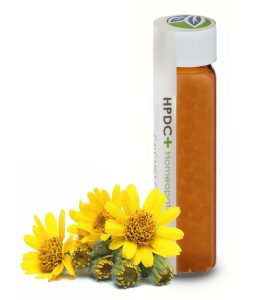
Arnica 30C Homeopathic Remedy
6g pot · Family safe · Traditional preparation · UK trusted
£5.50
This article is for informational purposes only and does not constitute medical advice. Homeopathic remedies are complementary medicine and should not replace professional medical care for serious injuries or persistent symptoms. Always seek immediate medical attention for head injuries, suspected fractures, deep wounds, or any worsening condition.